
The thinking behind Undeniable Heat
What breeding means to me
I started growing in 2009, when getting hold of seeds was difficult enough on its own. Then came the disappointment of spending months growing them, only to have plants develop intersex flowers and seed the room. That happened around a dozen times during my first three or four years. After putting four to six months of time, money, and effort into a grow, finding yourself back in that position is a terrible feeling.
Those experiences shaped what I wanted to do as a breeder. I wanted a stable foundation in the genetics I worked with, and I didn’t want the people who eventually grew my seeds to go through what I had. Someone opening a pack is committing part of their life to those plants. I remember what that commitment cost me.
That’s why I believe so strongly in heavy stress testing and applying selection pressure. Females and males face the same expectations in my program. I want to see how they hold up, test the seeds I create, and keep a record of what actually happens.
Over the years, that work developed into the approach I call the Undeniable Heat system. Once I had a process I could repeat, I wanted to share it with other growers who were struggling with the same problems. The books and masterclass grew out of that decision.
A reason behind the choice
Know what you value in a plant
A memorable aroma will get my attention. So will a plant with strong structure and a presence that stands out in the room. But I’m interested in the whole experience: how it behaves, how consistently it performs, and whether the finished flower holds onto what made it interesting.
I’m a flower smoker, so aroma, flavor, and the finished experience carry a lot of weight in my decisions. Someone whose work centers on extracts may have different priorities. That’s part of the craft. We can care equally about the work and still choose different plants.
I think of breeding as an art with a foundation underneath it. Personal taste gives the project a direction. Observation and records give me something to support the decisions. I want to be able to explain why a plant stayed, why another left, and what changed my mind.
That last part matters. I’ve been excited about plants that didn’t hold up later. Getting attached to a name, a smell, or an early impression makes it harder to accept what happens next. I’d rather change my decision than spend the rest of a project defending it.
Understanding the language
Related plants can still be different
A pack of seeds can share the same parents without every seed producing the same individual. That’s why you’ll hear growers talk about different “phenos” within a line. In everyday grower language, they’re often talking about the individual plants they’re comparing.
Genotype refers to genetic makeup. Phenotype is the set of observable characteristics that develops through the interaction of genetics and environment. Structure, color, and flowering behavior are examples of characteristics people describe. The conditions belong in that description too.
This is why a photograph tells only part of the story. It shows that plant at that moment. The history tells you what led up to it and whether the same pattern showed up again.
What the generation labels tell you
The letters beside a cultivar’s name describe its breeding history. They help explain the relationship between generations. The records behind the label are what tell you how the plants actually performed.
| Label | What it describes |
|---|---|
| F1 | The first filial generation from a particular parental cross. |
| F2 | The next filial generation descended from the F1 generation. |
| F3, F4, and onward | Further filial generations. The number records progression through generations. |
| BX | A backcross, involving a return to a parent or recurrent parental line. |
| S1 | The first generation produced through self-fertilization. |
A generation number alone doesn’t establish quality or consistency. I want to know the history behind it and what the breeder observed.
Observation over time
I want the whole story
The masterclass opens with observation because that’s where my decisions begin. A pheno hunt is the process of evaluating the individuals in a population and deciding which ones interest me. In the Bison Burger project, the starting pack contained 23 seeds. That was the population documented in the film.
As that project moved forward, the notes accumulated. Early structure and vigor. Responses to changes in the room. Recovery. Later, flower characteristics and the post-harvest evaluation. Each part added information I didn’t have at the beginning.
Each part of the evaluation tells me something different.
| Part of the story | What I describe |
|---|---|
| Early growth | Emergence, vigor, posture, and the first differences between individuals. |
| Vegetative growth | Structure, branching, changes in leaf posture, and the way responses develop over time. |
| Flowering | Development, structural support, aroma, and any intersex expression recorded during the run. |
| After harvest | How aroma and flavor hold through the cure, along with my assessment of the finished flower. |
| Later evaluations | Whether earlier impressions hold up when I return to the plant or review its offspring. |
A response needs context
In the masterclass, I describe a thirteen-day low-input period and the differences visible afterward. That passage shows why the history belongs beside the photograph. Without it, a viewer sees a green plant or a yellowing plant and misses what happened before the camera came on.
I also want to understand whether a problem came from the plant or the conditions around it. A symptom is something I can record. The explanation takes more work. Keeping those two things separate makes the record more useful when I look back.
The patterns I’ve learned to watch
One thing that keeps me interested in this work is how connected a plant’s responses can be. I’ll notice something early, watch what happens later, and then go back through the notes to see how the two fit together. Stress testing has helped me recognize patterns I would have missed if I’d only paid attention when everything looked good.
Sex-reveal timing is one example. In my own runs, plants that showed sex earlier were often among the first to show intersex traits under later stress. That’s why I tend to favor plants that reveal sex around eight weeks or later. It’s a pattern I’ve come to pay attention to through repeated observation, alongside the rest of that individual’s history.
Every stress test I use has a purpose. I’m looking at the response and how it relates to what the plant expresses as it develops. Seeing those patterns repeat across runs, and having the records to compare them, gives me a better basis for my selections.
An overlooked part of the story
Why I give males so much attention
A large part of Undeniable Heat focuses on males because they’ve taught me some expensive lessons. A male can make a strong first impression, but its own appearance only gives me part of the information I want. The offspring are another part of that story.
There was one male I almost overlooked. He wasn’t the most dramatic plant in the room. What drew me back was his structure and consistent posture. The offspring later gave me a much stronger reason to value him. That experience stayed with me because it challenged my first impression.
The one I trusted too soon
Another male looked promising enough that I used him in a project involving five females. Later in flowering, I found female flowers on him. By then, the project was already underway.
I discarded the seeds and shelved the work. That was a hard loss, but releasing something I no longer trusted would have passed the uncertainty to someone else. It changed how much weight I put on an early assessment.
In the masterclass, I explain why I followed that male through the end of flowering. I wanted the complete record of his development. The observations continued well beyond the first promising signs.
Two different questions
What I mean by the Colosseum
People associate my work with stress testing, and that’s fair. I place a lot of importance on resilience and on seeing how a plant responds when conditions become difficult. There’s also a later phase I call the Colosseum.
The distinction is the question being asked. The earlier evaluations focus on response under pressure. The Colosseum is my comparison of the remaining contenders under more favorable, consistent conditions. I’m looking at their finished qualities and the overall experience of working with them.
That’s where the personal side of selection becomes especially clear. Aroma, flavor, structure, and the way the flower holds through a cure all matter to me. A plant can be resilient and still leave me wanting something else from the finished result.
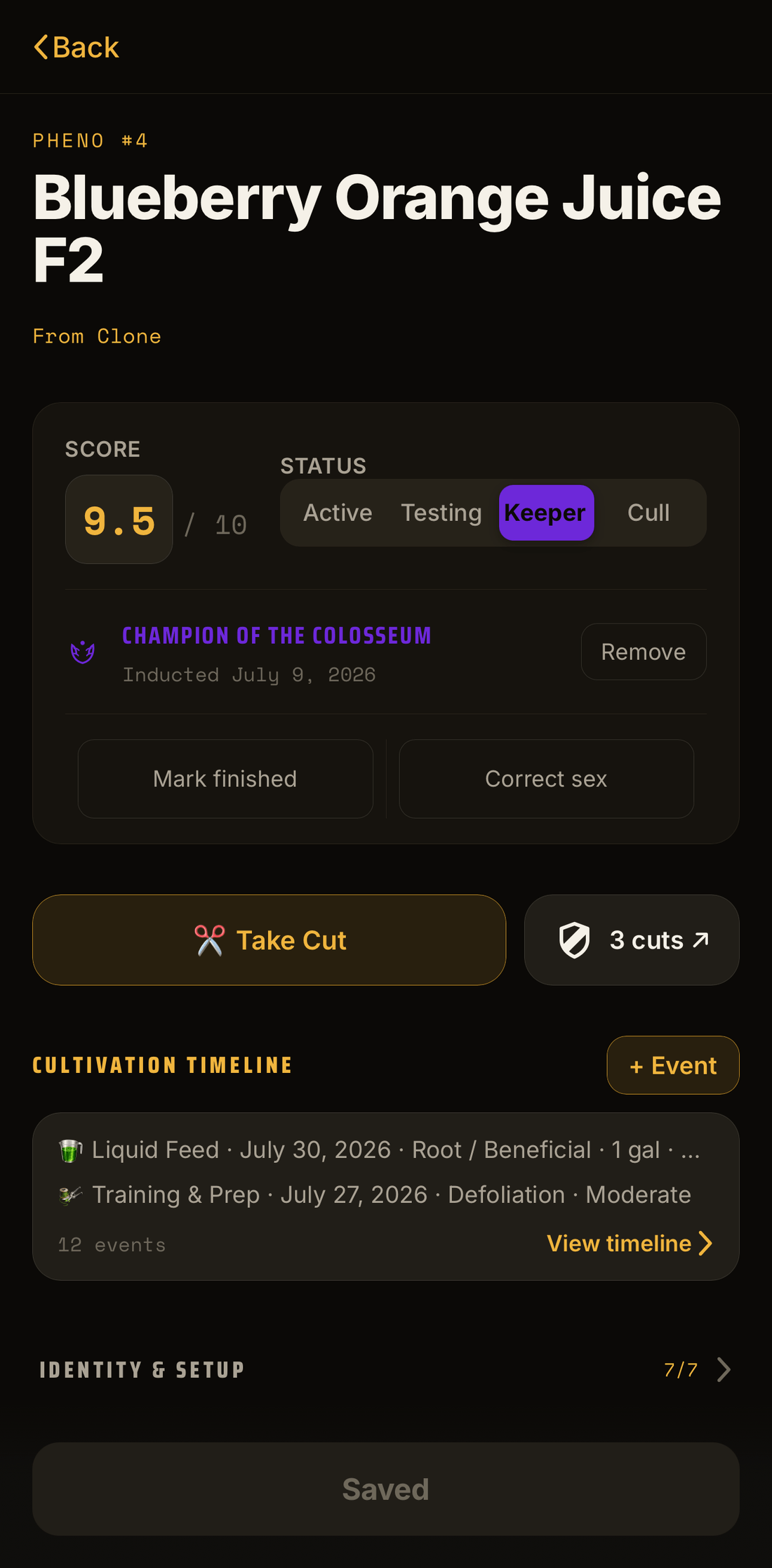
Blueberry Orange Juice #4 is a good example. I found her in the F2 generation in 2020 and observed her over repeated runs. Her performance kept bringing me back, along with an aroma I described as fresh orange juice in veg that developed into blueberry maple syrup in flower. Those are my sensory impressions of that particular cut. They help explain why I remember her so clearly.
Something to return to
Write down why it mattered
You won’t remember everything that happens with every plant in a garden. I certainly don’t. Details blur together, especially once you’re several runs past the moment you’re trying to recall. Documentation gives me something dependable to return to when memory falls short.
I write down what happened and why it mattered to the decision I made. Plant identity, dates, conditions, and photographs help put that decision back in context. If I change my mind later, I want to know what changed it. That history helps me make better selections and explain the reasoning behind them.
Aroma is a good example. I describe the different qualities within a scent and how that impression changes after harvest. Writing down what I actually notice is more useful than calling everything “loud.” Those descriptions are sensory notes; identifying the compounds themselves is a different question.

Cultivar Logbook ProKnow What You Grow
Keep the individual attached to the information
A lineage tells me where a plant came from. An individual identifier tells me which plant the note belongs to. I keep those distinctions in the record because several siblings can share a cross name and still have very different histories.
This is the purpose behind the companion Cultivar Logbook: having somewhere to keep the observations and reasoning together. The same idea carries into Cultivar Logbook Pro. The format can be paper or digital. What matters is being able to return to the work and understand it.
The lessons that stay with you
Why “Guard the Queen” is in the book
One of my hardest lessons involved a cut called Little Sebastian. A friend trusted me with it, and I lost it after assuming the backups would work out. I later learned he no longer had access to it either.
There were descendants, and I spent time looking through them. Some reminded me of her, but I didn’t find the same plant. That loss is the reason the preservation chapter is personal. The original individual and its descendants are different things.
Sexual reproduction reshuffles inherited material. Repeating a cross doesn’t promise the return of one particular individual. That simple distinction explains why the plant itself can carry so much meaning to the person who found it.
Why I’m cautious about outside cuts
I also dealt with an aphid problem that followed the arrival of outside clones and eventually affected more of my garden. That experience shaped my reluctance to bring in outside cuts. I generally prefer to work with plants I’ve hunted myself.
That’s a personal boundary built around what I’ve already lost and what I’m trying to protect. A popular name doesn’t erase the history of a plant or the questions about where it has been.
Respect for the grower
What I want “tested” to mean
I grow and test the seeds I create because I want firsthand knowledge of the genetics carrying my name. Feedback from other growers can be valuable, and I’ve learned from it. I still feel responsible for doing that work myself and giving people as much useful information as I can.
Authenticity matters to me. I’m frustrated by seed releases with barely any information behind them, testing left entirely to other people, or photographs that don’t honestly represent the genetics being sold. The person buying those seeds deserves to know what was grown, what was observed, and what the breeder actually did.
If you’re reading a breeder’s description, these are useful things to look for:
- A clear lineage and generation, with the parent selections identified where available.
- Original photographs that actually represent the plants being discussed.
- Descriptions of the conditions and observations behind the claims.
- Useful detail about variation, including problems that appeared.
- A clear distinction between what was observed in the parents and what was observed in the offspring.
That information gives you something to judge. A breeder doesn’t need to film every day of every project to explain the work. But when someone asks a reasonable question about a release, there should be more to the answer than excitement about the parents.
I’ve shelved projects I had already put months into. I’ve changed my mind about plants I wanted to believe in. Those decisions belong in the story alongside the keepers, because they explain what I’m willing to put my name on.
I remember being the grower who had very little information and months of work on the line. That’s who I’m thinking about when I test, document, and share what I learn. Doing the work and being honest about it is a hill I’m willing to die on.
Continue with the work
The books and the masterclass
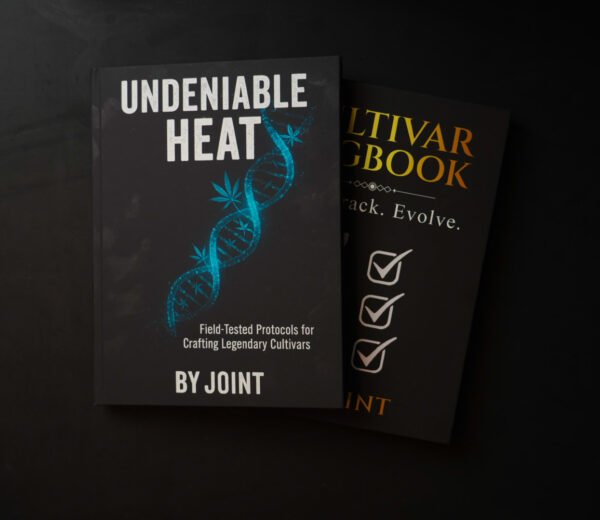
Undeniable Heat goes deeper into the experiences and decisions behind my approach. The Cultivar Logbook gives you a place to document your own observations and selections. Together, they connect the process with the record of your work.
The free masterclass follows an actual project, so you can see the observations behind the discussion.
Genetics glossary & further reading
For more on the genetics terms used here, these glossaries explain genotype, phenotype, and inheritance.